
Best online blackjack casino: compare rules before stakes
 Offers for CanadaUpdated November 2, 2026

Winshark · Welcome bonus300 free spins
Reviews (4,939)★★★★★
5.0Rating
Figures supplied by the site owner; not independently verified.18+ · Offer terms
18+. Bonus wording, rating and review count were supplied by the site owner and have not been independently verified. Check availability, eligibility and current bonus terms with the operator for your location. Gambling carries financial risk.

TuffPuff · Welcome bonus+240% deposit bonus
Reviews (3,993)★★★★★
5.0Rating
Figures supplied by the site owner; not independently verified.18+ · Offer terms
18+. Bonus wording, rating and review count were supplied by the site owner and have not been independently verified. Check availability, eligibility and current bonus terms with the operator for your location. Gambling carries financial risk.
22Bet · Welcome bonus+250% on your deposit
Reviews (9,383)★★★★★
5.0Rating
Figures supplied by the site owner; not independently verified.18+ · Offer terms
18+. Bonus wording, rating and review count were supplied by the site owner and have not been independently verified. Check availability, eligibility and current bonus terms with the operator for your location. Gambling carries financial risk.
Best online blackjack casino searches should focus on exact table rules before studio appearance. This guide explains payout, dealer behaviour, extra-stake actions, and the limits of a general decision reference.
- Independent guide with sponsored partner offers
- Published Ontario procedures identified separately
- CAD context; confirm the actual cashier currency
- 18+ notice; applicable account age requirements remain relevant

On this page
- Best online blackjack casino: what should be compared first?
- Natural blackjack: why does the posted payout matter?
- Dealer rules: what does soft seventeen change?
- Doubling and splitting: how can one hand increase exposure?
- Hit, stand and surrender: how should a decision reference be used?
- Side bets and insurance: why should they be compared separately?
- Live and RNG blackjack: how do controls change the experience?
- Mobile blackjack: what should you inspect before a hand?
- Bonus eligibility: why can blackjack contribution differ?
- History and errors: how do you investigate a disputed hand?
- Comparison examples: what should different readers prioritise?
- Final check: what should you know before joining?
- FAQ
Best online blackjack casino: what should be compared first?
The best online blackjack casino comparison begins with the table rules, not the colour of its studio. Blackjack includes player decisions, so differences in available actions can change the appropriate decision framework.
Record the full game title, provider, and version before comparing tables. A familiar name can refer to several products whose payout, dealer behaviour, or splitting conditions are not the same.
For a Canadian account, confirm the table inside the actual catalogue. A global operator page or provider portfolio can explain a format without proving that format is available through your particular route.
This guide explains how to inspect rules and control exposure. It does not claim a private table test, a current catalogue-wide ranking, or a strategy that guarantees profit for a player.
Build a rule-first shortlist
Begin with ordinary blackjack payout and the dealer's drawing rule. Then examine doubling, splitting, surrender if available, and the distinction between the main hand and any optional side bets.
Only after those checks should presentation decide between otherwise suitable candidates. A clear interface and comfortable pace matter, but they should not hide a rule difference that changes the product.
Keep a short record of unresolved questions rather than filling gaps with assumptions. A comparison is more useful when it identifies one missing rule than when it awards an unsupported numerical score.
Your final choice should combine understandable conditions with a stake you can afford to lose. Knowing a decision framework does not remove chance or make blackjack an alternative to reliable income.
Natural blackjack: why does the posted payout matter?
A natural blackjack normally refers to the qualifying initial two-card hand described in the rules. It should be distinguished from reaching the same total with additional cards or after splitting a pair.
Check the posted payout for that natural rather than assuming every table uses the same ratio. A different ratio changes settlement on a winning natural even when the surrounding game looks familiar.
Also read how a tie with a dealer natural is handled. The relevant point is the rule-defined outcome, rather than the celebratory animation that appears when your own opening cards look strong.
Do not compare table quality from a single memorable natural. One outcome tells you how that round settled, while the comparison concerns the continuing rules that apply across all eligible hands.
Compare ratios using the same convention
For an arithmetic example, a hypothetical payout of three units for two staked differs from six units for five. Compare ratios on the same stake before treating them as equivalent wording.
That example is a mathematical illustration, not a claimed payout for every Canadian 888 table. The help panel of the actual game must establish the rule offered to your account.
Record whether the ratio states profit or total returned including the stake. Mixing those conventions can make two identical payouts look different or make different payouts appear equal in a comparison.
If the display is unclear, resolve the wording before betting. A payout is central product information and should not require risking a hand merely to discover what the label actually means.
| Rule | Question to answer | Why it belongs in the comparison |
|---|---|---|
| Natural payout | What ratio is posted, and does it describe profit? | Defines settlement for a qualifying natural |
| Dealer behaviour | Does the dealer draw or stand on soft seventeen? | Identifies a rule assumption for decision references |
| Doubling | Which hands qualify and what follows? | Changes actions and exposure |
| Splitting | Which pairs qualify and what restrictions apply? | Changes hands and combined stake |
Dealer rules: what does soft seventeen change?
A soft hand contains an ace that can still count at its higher value without exceeding the permitted total. A hard hand lacks that flexibility under the cards currently held.
The dealer's required action on a soft total is part of the table rules. Look for whether the dealer draws or stands on soft seventeen instead of relying on the table's name.
This matters because a decision reference prepared for one rule set may not fit another. A chart is only as relevant as the conditions it assumes about dealer behaviour and player actions.
Do not interpret the dealer's drawing rule as a personal choice made in response to your cards. The dealer follows the stated procedure, while your decisions are governed separately by the game.
Match the rule to the reference you use
Write the dealer rule in plain language beside the table name. This prevents an abbreviated label from being forgotten when you later compare another table with similar presentation or a different provider.
If a live stream obscures a card briefly, use the settled hand record rather than guessing the total. Visual uncertainty is a reason to inspect evidence, not proof that the rule changed.
For computer-generated formats, read the same dealer rule even though the action is animated. Delivery format does not remove the need to identify the underlying rule governing when the dealer takes cards.
A useful comparison therefore includes dealer behaviour as its own row. It should not be buried inside a broad description such as classic blackjack that leaves the decisive condition unspecified for readers.
Doubling and splitting: how can one hand increase exposure?
Doubling adds another stake under the table's stated conditions and usually limits the following draw. Check which starting hands qualify and what happens next, rather than assuming every format permits identical actions.
Splitting turns a qualifying pair into separate hands with separate stakes. The action changes your total money at risk, so a comparison should explain its cost as well as its tactical purpose.
Read whether doubling after a split is allowed, how many splits are permitted, and how split aces are handled. These details should be recorded independently because tables can combine them differently.
Also check whether equal-value cards count as a qualifying pair or whether another restriction applies. A visual similarity between two cards does not replace the exact condition written in the game's rules.
Budget for the whole hand sequence
Before joining a table, make sure your planned budget can accommodate the actions you intend to use. A minimum opening stake alone does not describe the cost of a completed hand sequence.
Do not add money impulsively because a split or double option appears. The availability of an action is not a requirement to exceed the financial boundary you set before opening the game.
When comparing a decision chart, verify its doubling and splitting assumptions before using it. A reference that assumes unavailable actions cannot simply be transferred unchanged to the table currently on your screen.
If the controls make additional exposure unclear, choose another interface or stop. The key practical question is whether you can identify the combined stake before confirming the action that changes it.
Hit, stand and surrender: how should a decision reference be used?
A blackjack decision reference needs the rule set, your hand type, and the dealer's visible card. It cannot be replaced by an instruction to hit or stand whenever a total feels uncomfortable.
Distinguish hard totals, soft totals, and pairs before reading a chart. Those categories can lead to different available actions even when the visible numerical total initially appears similar to the player.
If surrender is offered, read the exact timing and consequence in the table rules. Do not assume the option exists or works identically across games because a general strategy article discusses it.
Use a reference to understand the decision structure rather than promise a profitable session. A mathematically informed choice can still lose the hand, and a poor choice can produce a winning result.
Judge the framework separately from one outcome
Avoid changing the framework after one disappointing outcome. Judging a decision only by whether its particular hand won confuses the rule-based comparison with the unpredictable result of a single event.
Similarly, another player's visible choice does not establish what you should do. Your hand, the dealer's card, and the actual rules matter more than confidence expressed in a live chat window.
If you cannot read the reference comfortably within a live decision window, learn the framework outside paid play. Choosing a slower or demonstration format where available can simplify the learning question.
Do not claim that a chart eliminates the casino's advantage or guarantees recovery of earlier losses. A responsible comparison explains what assumptions the reference uses and what uncertainty remains after a decision.
| Position | Inspect separately | Common comparison error |
|---|---|---|
| Main hand | Core rules and accepted action | Treating every variant as identical |
| Side bet | Covered event, stake and paytable | Comparing a rare maximum prize with ordinary payouts |
| Insurance | Eligibility and separate settlement | Treating it as free protection |
| Repeated settings | All active stakes before a round | Looking only at the opening main-hand chip |
Side bets and insurance: why should they be compared separately?
Optional side bets have their own qualifying outcomes and paytables. Compare them separately from the main blackjack hand rather than treating every extra betting area as part of one standard product.
A side bet can settle differently from the main hand. Winning one while losing the other requires reconciling the combined stakes and returns before deciding what happened to the round overall.
Insurance is also a separate wager with its own condition and settlement. Its presence beside a strong-looking hand does not make it a free protection feature attached to the original stake.
Read whether an optional bet remains selected or repeated after a round. An interface that remembers a previous choice can expose more money than expected if you inspect only the main-hand stake.
Keep optional stakes visible in the round total
For each optional position, record the stake, covered event, and posted payout. If you cannot explain one of those fields, leave the option unused rather than learning its conditions through a purchase.
Do not compare a rare maximum side-bet prize with an ordinary main-hand payout as if they described the same chance. Coverage and settlement must stay attached to the specific event being evaluated.
An optional feature can make a table more complicated without making it more suitable. Readers who want a straightforward main-hand comparison can ignore those extras when choosing which rules to learn first.
Before confirming any round, check the total across all active areas. A series of small optional stakes can alter the cost even when the chip placed on the main hand remains unchanged.
Live and RNG blackjack: how do controls change the experience?
Live blackjack involves a shared broadcast and decision windows, while a computer-generated version can offer a different pace. Compare those practical differences without assuming either delivery format guarantees a favourable outcome.
On a live table, check how the interface identifies your turn, the remaining decision time, and the action accepted. A clear accepted-action indicator matters when several players or hands appear together.
On an RNG table, inspect how quickly the next round can begin and whether the stake remains selected. Convenience should not make it difficult to notice the number of paid actions taken.
Both formats require readable rules, visible totals, and a way to review completed events. Smooth video or attractive animation cannot substitute for that information when a hand needs explanation afterwards.
Match pace to your ability to inspect the action
If the game offers several seats or hands, compare the total exposure and decision workload. More simultaneous hands are not a preference; each one can involve its own stake and additional actions.
Choose a pace that permits deliberate choices without pressure. A faster table may be less suitable if you are checking rule differences or find the decision controls difficult to distinguish on screen.
When a connection interruption occurs, avoid repeatedly pressing action buttons. Reconnect and inspect the recorded state before deciding whether an action was accepted or a further round should be considered.
Keep table-support questions separate from account-payment questions. A dealer broadcast can help explain the game presentation, but withdrawal allocation or document review belongs to the official account support process instead.
Mobile blackjack: what should you inspect before a hand?
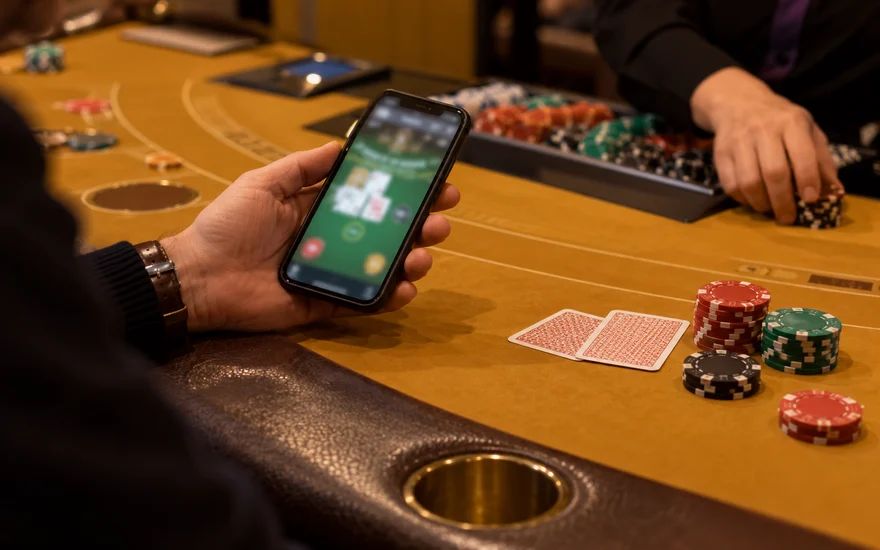
On a phone, identify the main stake, side-bet areas, hand totals, action buttons, and rules link before play. These elements matter more than fitting a large studio video onto the screen.
Check whether hit, stand, split, and double controls remain distinguishable in your orientation. An interface that makes adjacent actions easy to confuse can be unsuitable even when the game rules are familiar.
Rotate the device only when you can verify the resulting state. A layout change should not leave you guessing which hand is active or whether a previous action already reached the game.
Open the help panel and read a rule at your ordinary text size. If essential information requires awkward zooming or disappears behind controls, compare another available presentation before committing a stake.
Prefer readable state over decorative detail
Inspect how multiple hands are labelled if that option is available. Clear numbering and accepted-action feedback can matter more than extra visual detail when the same screen contains several separate decisions.
Do not rely on audio to identify a required action or settled result. Sound may be unavailable in your setting, and the screen should still provide enough information for deliberate operation.
If you need to investigate a hand, record the table name, time, and available round identifier. A screenshot of cards alone may omit the accepted action or the amount actually at risk.
Avoid submitting account documents or banking information through an unexpected message while solving a game interruption. Use the official account help route and keep payment credentials separate from a public hand discussion.
Bonus eligibility: why can blackjack contribution differ?
A promotion can exclude blackjack, give table games a different contribution rate, or restrict particular actions. The general phrase casino bonus does not establish that every table qualifies under the accepted offer.
Read the exact eligible-game wording and any named exclusions before using bonus-linked funds. A game appearing in the ordinary catalogue is not sufficient evidence that it counts toward the promotion's conditions.
Check whether maximum-stake conditions consider doubles, splits, or side bets. A small initial stake does not answer how the promotion treats additional money committed later in the same hand sequence.
The owner's supplied showcase percentage is a display input, not proof of current account eligibility. The promotion actually offered by the operator must supply the conditions used for a real decision.
Ask about the exact offer and action
When wording is unclear, ask support about the named offer and exact table. A general reply that blackjack is available may answer catalogue access while leaving bonus contribution and action restrictions unresolved.
Keep any response alongside the written conditions. If the explanation appears inconsistent with a clause, ask which rule applies rather than treating an informal message as permission to ignore the published terms.
Consider declining a promotion if its restrictions make your intended play hard to understand. Accepting a headline amount is optional, and more conditions do not automatically create more useful entertainment value.
For withdrawal eligibility, distinguish the game's settled award from the account's available balance. A promotion can affect the latter, so consult the bonus guide instead of assuming the table failed to pay.
| Situation | Record | Useful next action |
|---|---|---|
| Unclear rule | Exact table and help wording | Resolve the condition before play |
| Additional exposure | Opening and combined stakes | Check how split or double was accepted |
| Interrupted screen | Time and round reference | Review the recorded hand |
| Bonus question | Named offer and exact table | Check contribution and action restrictions |
History and errors: how do you investigate a disputed hand?
Begin with the round history and accepted action rather than the outcome you expected. A hand can feel surprising while still following the posted rules and the choice recorded by the interface.
Write down the full table name, approximate time, stake total, and any round reference. These details let support identify a specific event rather than reconstructing a complaint from a partial card image.
Separate a rules disagreement from a technical discrepancy. One asks how a documented condition applies; the other asks whether the system recorded or settled the action that the player actually submitted.
If the issue concerns doubling or splitting, include the total stake after the action. Comparing a returned amount only with the opening stake can hide the hand sequence that needs explanation.
Make the enquiry about one identifiable event
Ask support which action was accepted and how the round was settled under the identified rule. A question is easier to investigate than an assertion that the game should have drawn differently.
Do not replay the situation with paid stakes to prove a point. A new hand has different cards and creates another transaction, while the original case still needs its own record examined.
Preserve relevant screenshots privately, excluding passwords, identity documents, or unnecessary payment details. The official support route is appropriate for account-specific evidence; a public chat is not a substitute for that process.
If a reply leaves an inconsistency unresolved, identify the record and clause that still conflict. Keeping the follow-up narrow helps distinguish a remaining problem from a general objection to losing a hand.
Comparison examples: what should different readers prioritise?
A reader learning blackjack may prioritise clear rules and a manageable pace over the number of side bets. That choice can make the product easier to understand without claiming a better outcome.
Another reader comparing established rule sets should start with payout, dealer behaviour, doubling, and splitting. Attractive presentation becomes relevant only after the actual rules have been matched to the comparison purpose.
A mobile reader may find that two similar tables differ mainly in button spacing and active-hand visibility. Those are practical reasons to prefer one interface without inventing a difference in the game.
Someone interested in a special variant needs a new rules comparison rather than an assumption that ordinary blackjack advice applies unchanged. A familiar title can conceal an altered payout or feature condition.
Explain trade-offs with concrete rule differences
For a hypothetical comparison, imagine two tables with the same dealer rule but different natural payouts. Explain the payout difference directly instead of burying it inside a broad rating for studio quality.
Now imagine identical ordinary rules with different side bets. A reader planning to avoid optional wagers may reasonably consider those extras irrelevant, while another reader needs their separate paytables explained before choosing.
These are decision examples, not a claim that the named combinations are currently offered through every Canadian 888 route. Actual access must be checked in the catalogue before making a table-specific recommendation.
A useful shortlist states who each option suits, which rule supports that statement, and which drawback remains. It can end without a universal winner when different priorities lead to different reasonable choices.
Final check: what should you know before joining?
Before joining, explain the natural payout, dealer rule, and available additional-stake actions in your own words. If any one remains unclear, return to the help panel rather than making a paid hand.
Confirm that your reference matches the table's conditions and that your planned budget covers the exposure you intend to allow. A familiar game name does not establish either of those two requirements.
Inspect the total across the main hand, optional bets, and any repeated settings. Remembered controls can preserve a previous selection even when your plan is to use a simpler or smaller stake.
If a promotion is active, check its treatment of the table and actions. Then make sure you know where completed hands and account transactions can be reviewed if an interruption creates uncertainty.
Keep the final choice optional
Use the roulette comparison if you want to examine wheel formats instead of card decisions. Use the withdrawal guide when the remaining question concerns moving a balance to a receiving payment method.
Do not treat either internal guide as a reason to deposit or increase a budget. Research can finish with the conclusion that the available game, rules, or conditions do not suit circumstances.
Stop when your planned time or spending boundary is reached rather than waiting for a particular hand. A feeling about earlier results does not change the next hand's uncertainty or your limit.
The best online blackjack casino decision is therefore specific and conditional: understandable rules, suitable controls, and acceptable exposure. A well informed choice still permits losses and never guarantees a profitable result.
What this guide provides
- Topic specific explanations and source scope
- Separate account, payment and campaign decisions
What remains account specific
- Actual availability, limits and campaign eligibility
- Private account status and payment completion
Frequently asked questions
Can you play blackjack online and win money?
A permitted hand can produce a win, but a session can also lose money. Understanding rules and decisions does not guarantee profit or make blackjack a dependable source of income.
What should I compare before choosing a blackjack table?
Start with natural payout, dealer drawing rules, doubling, splitting, and any surrender option. Then compare controls and pace, keeping optional side bets separate from the main-hand rules you intend to use.
Does a basic strategy chart work for every blackjack game?
No. A reference depends on its assumed rules and available actions. Check those assumptions against the actual table, and do not mistake an informed decision for a guaranteed winning hand.
Why do splitting and doubling affect my budget?
They can add stakes after the opening bet. Compare the combined exposure of the completed hand sequence rather than assuming that the initial chip describes everything you might choose to risk.
Are side bets included in the main blackjack payout?
Optional positions have their own covered events and paytables. Reconcile their stakes and awards separately, then inspect the total round result before deciding whether the overall action returned more than it cost.
Is live blackjack automatically better than RNG blackjack?
The formats differ in presentation and pace, while the exact table rules still need comparison. Choose deliberate controls and readable information without assuming either delivery format guarantees a better result.
Can I use a casino bonus on blackjack?
Check the accepted offer’s eligible games, contribution conditions, and treatment of extra stakes. Availability in the normal catalogue does not prove that a table qualifies under your particular promotion.
What should I record if a blackjack hand looks wrong?
Keep the table name, time, round reference, total stake, and accepted action. Ask official support how that identified hand settled under its rules rather than recreating the situation with paid play.
Read next
- Best online roulette casino: compare wheels and table rules
- Best Canadian online slots: compare mechanics and game rules
- 888 Casino bonus: understand the conditions
- 888 Casino withdrawal: follow the payment stages
- 888 Casino verification: documents and account checks
- 888 Casino français : compte, paiements et retraits au Canada
Offer conditions and source review
Showcase figures and headline were supplied by the site owner; they are not independently collected reviews or verified current operator terms. Check the actual campaign and account eligibility. 18+; use the age requirement applicable to your account and province.
Public documentation reviewed on 29 October 2026. This guide does not inspect private casino accounts or test a live payment.